
Starting a blog isn’t about “setting things up” anymore. It’s about getting the right things done fast, without wasting time on useless steps.
This guide skips the fluff and shows you exactly what matters. From choosing your niche and launching your blog to fixing the critical settings right after installing WordPress.
Most beginners stop at installation. That’s the mistake. A blog only works when it’s properly configured, secured, and ready to grow from day one.
Here, you’ll do both in one flow. Start your blog the right way, then immediately optimize it so you don’t have to fix problems later.
Start with the Basics
If you skip this step, you’ll end up restarting your blog later. Get this right first so everything else becomes easier.
Choose the Right Niche
Don’t pick a random topic. Choose something people are already searching for.
- Go for topics with real demand
- Check if others are already earning in that niche
- Avoid broad topics like “general blog”
Here are simple examples to understand this better:
- Bad niche: Fitness
- Better niche: Weight loss for beginners
- Even better niche: Weight loss for busy working professionals
- Bad niche: Technology
- Better niche: Smartphones
- Even better niche: Budget Android phones under ₹20,000
The more specific your niche, the easier it is to grow.
Define Your Target Audience
You’re not writing for everyone. Be specific.
- Decide who your content is for
- Understand their problems and needs
- Focus on helping, not just writing
When your content feels useful, people stay and come back.
Pick a Blogging Platform
This decision matters long-term. Don’t choose something you’ll outgrow.
- Use self-hosted WordPress
- Avoid free platforms with restrictions
- Make sure you can customize and scale
This gives you full control from the start.
Common Beginner Mistakes That Kill Blogs Early
- Choosing a broad niche: Even after selecting a niche, going too wide makes it hard to stand out. Keep it specific and focused.
- Not defining a clear audience: If your audience is unclear, your content becomes random and unfocused. Always know who you are writing for.
- No clear goal: Decide whether you want traffic, income, or authority. This direction shapes your entire blog.
- Expecting fast results: Blogging takes time to grow. Focus on consistency instead of quick wins.
- Overplanning without publishing: Don’t wait for everything to be perfect. Start publishing and improve as you go.
Set Up Hosting and Install WordPress
This is where your blog actually goes live. Just follow the steps and keep it simple.
Choose a Reliable Hosting Provider
Your hosting affects speed, uptime, and overall performance. A bad host will slow your site and create issues later.
- Choose a provider known for speed and stability
- Check real user reviews, not just marketing claims
- Make sure support is responsive when you need help
If you’re not sure which one to pick, check your detailed guide on best web hosting providers for a clear comparison.
Register a Domain Name
You have two options here.
- Buy domain and hosting from the same company (easier setup)
- Buy domain from a separate registrar (more control and flexibility)
Keep your domain simple, short, and easy to remember. Prefer .com if available.
Connect Domain with Hosting
If your domain and hosting are from the same provider, this is usually automatic.
If they are from different providers, you need to connect them manually:
- Go to your domain registrar
- Find nameserver settings
- Replace them with your hosting provider’s nameservers
After this, wait for DNS propagation (can take a few hours).
Install WordPress
There are two ways to install WordPress.
1. One-Click Installation (Recommended)
This is the easiest method and works for most beginners.
- Open your hosting control panel
- Find “WordPress” in Scripts
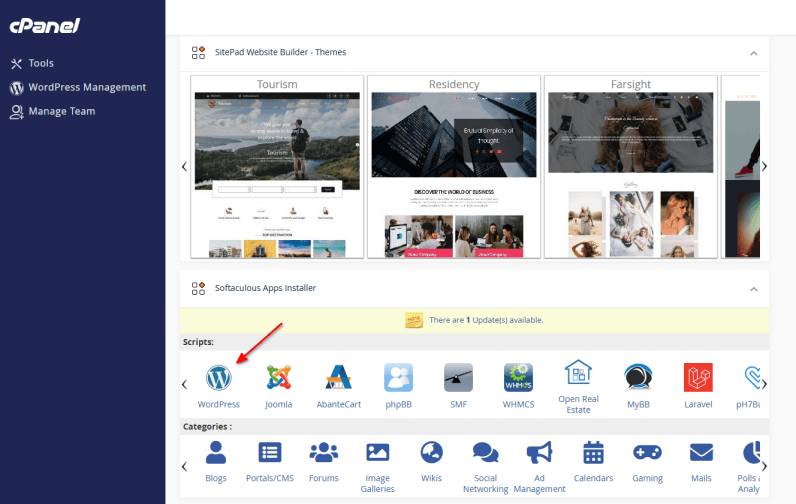
- Use “Quick Install” for automatic wordpress installation.
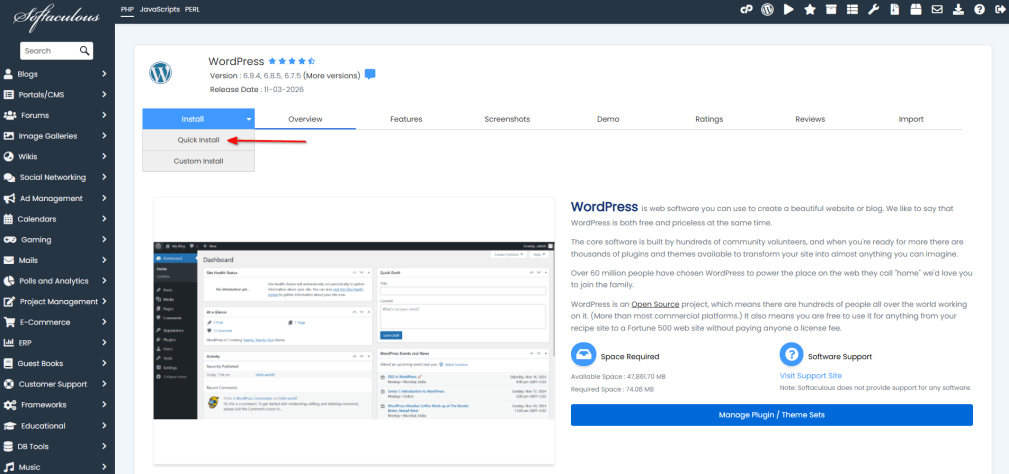
- Enter site details and install.
Your site will be ready in a few minutes.
2. Manual Installation
This method gives more control but takes extra steps.
- Download WordPress
- Upload files to your hosting
- Create a database
- Run installation setup
If you want complete step-by-step instructions for the manual installation, follow this detailed wordpress installation guide.
For most users, one-click install is the best choice.
Configure Essential WordPress Settings
Right after installation, a few settings need to be fixed. If you skip this, it can cause SEO issues and unnecessary problems later.
Set Site Title, Tagline, and Timezone
These are basic but important.
- Add your blog name and a clear tagline
- Set your correct timezone
- Check your admin email
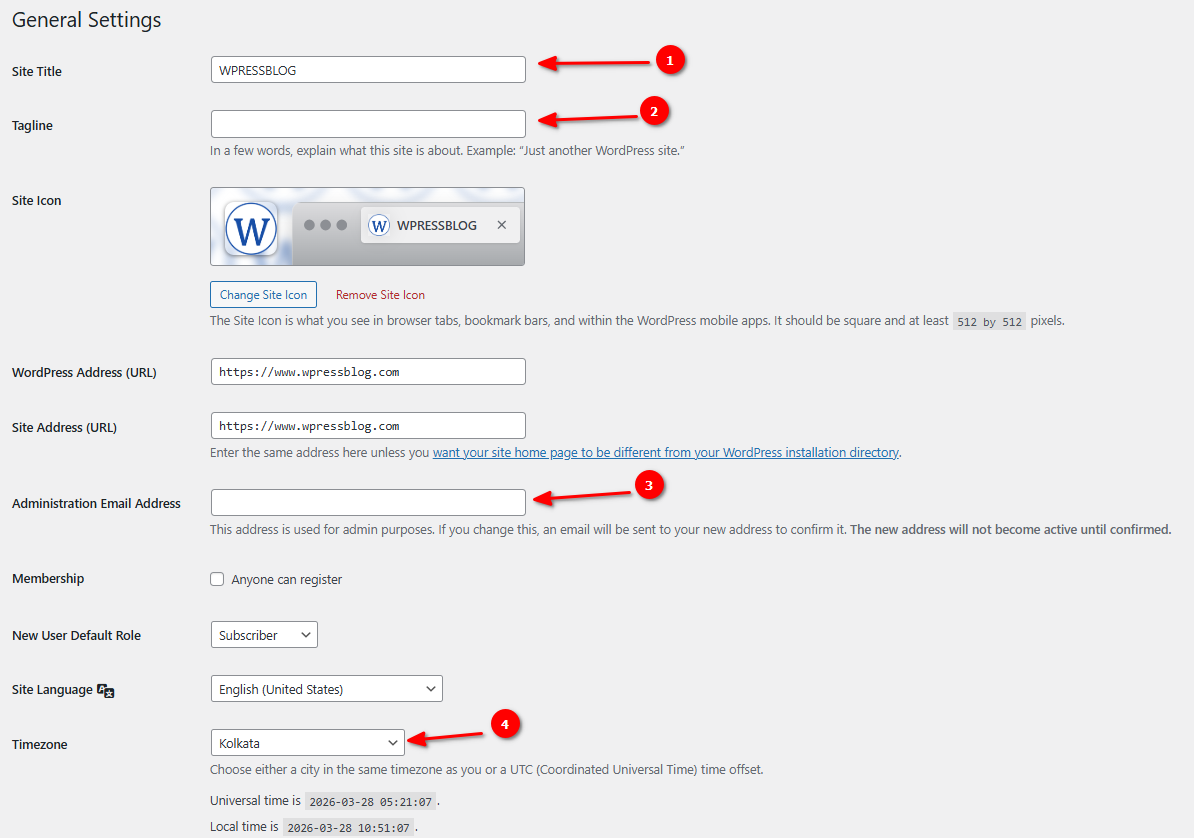
This keeps your site properly configured from the start.
Set Permalink Structure
This affects your URL format and SEO.
- Go to Settings → Permalinks
- Select “Post name”
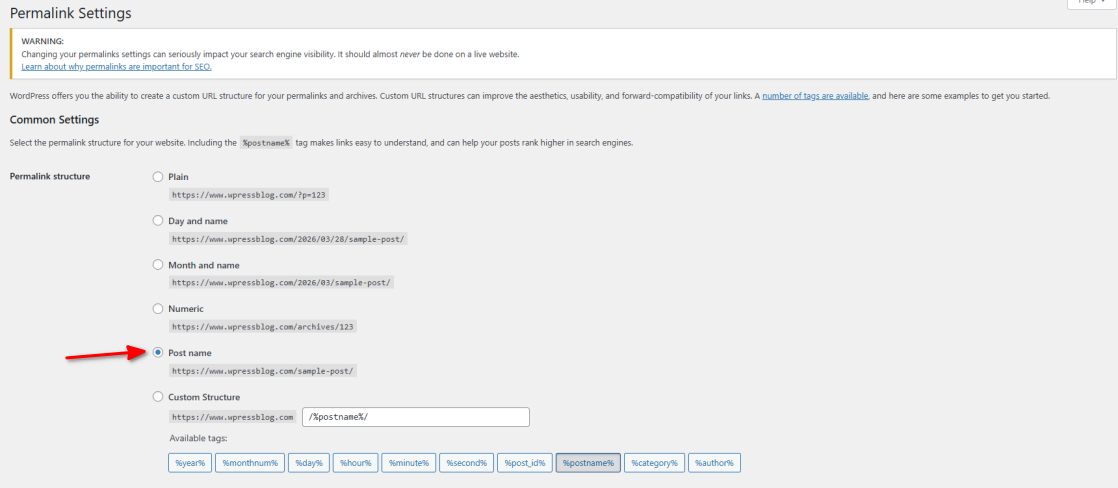
This creates clean and SEO-friendly URLs.
Delete Default Content
WordPress comes with unwanted content.
- Delete “Hello World” post
- Remove default sample page
- Delete unused themes and plugins
This keeps your site clean and organized.
Configure Reading and Discussion Settings
Control how your blog behaves.
- Set homepage to latest posts (or a static page later)
- Disable unnecessary comments if not needed
- Enable comment moderation to avoid spam
This helps manage user interaction properly.
Set Homepage and Blog Page
Decide how your homepage should look.
- Create a homepage and blog page
- Go to Settings → Reading
- Assign pages accordingly
This gives your site a proper structure from the beginning.
Design Your Blog
Now make your blog look clean and usable. Don’t focus on fancy design, focus on clarity and readability.
Choose and Install a Theme
Your theme controls how your blog looks and feels. Keep it simple and fast.
- Choose a lightweight and clean theme
- Avoid themes with too many unnecessary features
- Focus on speed, readability, and mobile design
If you’re not sure which one to pick, check your guide on best WordPress themes for bloggers.
Install the Theme
- Go to Appearance → Themes
- Click “Add New”
- Install and activate your selected theme
Start simple. You can always customize it later.
Customize Design (Logo, Colors, Layout)
Keep your design simple and clean. Focus on readability, not decoration.
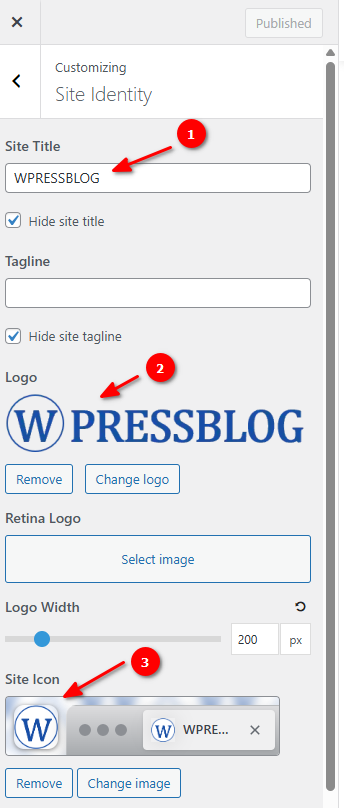
- Go to Appearance → Customize
- Upload your logo from Site Identity
- Add favicon (site icon) if available
Set Colors and Typography
- Open Colors and Typography settings inside Customizer
- Choose 1–2 main colors
- Use simple, readable fonts
Adjust Layout
- Set sidebar (left, right, or no sidebar)
- Choose full-width or boxed layout
- Adjust header and footer layout
Preview changes and publish once everything looks clean and easy to read.
Create Navigation Menus
Help users move around your site easily.
- Go to Appearance → Menus
- Add important pages (Home, About, Contact)
- Set it as your primary menu
A clear menu improves user experience and reduces confusion.
Install Essential Plugins
Plugins add important features to your blog. Don’t install too many, only what you actually need.
SEO Plugin
Helps your blog rank in search results.
- Optimize titles and meta descriptions
- Generate XML sitemap
- Control indexing settings
If you’re not sure which one to choose, check your article on best SEO plugins.
Security Plugin
Protects your site from attacks and unauthorized access.
- Enable login protection
- Limit login attempts
- Scan for malware
You can find the right option in your guide on best security plugins.
Caching and Performance Plugin
Improves loading speed and performance.
- Enable page caching
- Minify CSS and JavaScript
- Use browser caching
Refer to your article on best caching and performance plugins to choose one.
Backup Plugin
Prevents data loss.
- Schedule automatic backups
- Store backups safely
- Ensure easy restore option
Check your guide on best backup plugins for recommended options.
Anti-Spam Plugin
Stops spam comments and fake submissions.
- Filter spam automatically
- Reduce manual moderation
This helps keep your site clean without extra effort.
Create Important Pages and First Content
Now your blog is ready to publish. Start by creating essential pages and your first content.
Create Essential Pages (About, Contact, Privacy Policy)
These pages build trust and are required for most blogs.
- About page to explain who you are and what your blog is about
- Contact page so users can reach you
- Privacy policy page for legal compliance
You can create them from Pages → Add New.
Write Your First Blog Post
Don’t wait for perfection. Just start publishing.
- Choose a topic your audience is searching for
- Write clear and helpful content
- Use headings and simple structure
Your first post sets the direction for your blog.
Set Categories and Tags
Organize your content properly.
- Create main categories based on your niche
- Assign each post to a category
- Use tags only when necessary
This helps users and search engines understand your content better.
Content Mistakes to Avoid
- Publishing without keyword research: Writing without checking what people search leads to zero traffic. Always validate topics before creating content.
- Writing for yourself instead of users: Focus on solving user problems, not just sharing opinions. Content should match search intent.
- Inconsistent posting: Posting randomly slows growth. Stick to a simple, consistent publishing schedule.
Optimize Your Blog for SEO and Performance
If you ignore this, your blog won’t get traffic even if your content is good. Fix these basics early.
Set Up SEO Basics
Make sure search engines can understand your site.
- Set proper title and meta description for each post
- Generate (use SEO plugin for sitemap generation) and submit XML sitemap in Google Search Console
- Allow search engine indexing
These steps help your blog appear in search results.
Improve Website Speed
Slow sites lose visitors quickly.
- Use a caching plugin
- Compress images before uploading
- Choose fast hosting and lightweight theme
Faster loading improves both ranking and user experience.
Connect Google Analytics and Search Console
Track performance and fix issues.
- Add your site to analytics to track traffic
- Connect search console to monitor keywords and errors
- Submit your sitemap
This helps you understand what’s working.
Optimize Images and Content
Small improvements make a big difference.
- Use proper image sizes and compression
- Add alt text to images
- Write clear, structured content with headings
Well-optimized content performs better over time.
SEO & Performance Mistakes That Hurt Growth
Avoid these common issues that limit your traffic and rankings.
- Ignoring on-page SEO: Skipping titles, meta descriptions, headings, and internal links makes it harder to rank. Optimize every post properly.
- Slow website speed: A slow site hurts rankings and user experience. Use caching, lightweight themes, and fast hosting.
- Not optimizing images: Large, uncompressed images slow down your site. Always compress images and use proper formats.
Promote and Grow Your Blog
Publishing content is not enough. You need to actively promote it to get traffic.
Share on Social Media
Start with platforms where your audience already exists.
- Share your posts regularly
- Use simple captions and clear headlines
- Focus on 1–2 platforms instead of all
Consistency matters more than being everywhere.
Build an Email List
Email helps you bring visitors back.
- Add a simple email signup form
- Offer something useful (guide, tips, updates)
- Send emails when you publish new content
This builds a loyal audience over time.
Use Basic SEO Strategies
SEO brings long-term traffic.
- Target keywords people are searching for
- Write helpful and clear content
- Interlink your blog posts
Good SEO helps your content rank steadily.
Consistency and Content Planning
Growth comes from regular effort.
- Create a simple content plan
- Publish consistently (weekly or bi-weekly)
- Focus on quality over quantity
Blogs grow when you stay consistent.
Promotion Mistakes That Keep You Invisible
Fix these to actually get traffic and visibility.
- Not promoting content: Publishing alone is not enough. Actively share your posts across platforms.
- Relying only on Google: Traffic takes time from SEO. Use social media and other channels to get early visitors.
- Ignoring email list and social: Build an audience you own. Email and social help you bring users back consistently.
Monetize Your Blog
Once you start getting traffic, you can begin earning from your blog. Don’t rush this. Focus on traffic first, then monetize.
Affiliate Marketing
Promote products or services and earn commission.
- Join affiliate programs in your niche
- Recommend tools you actually use
- Add affiliate links naturally in content
This works well even with low to medium traffic.
Display Ads
Earn money from ad impressions and clicks.
- Use ad networks like Google AdSense
- Place ads without affecting user experience
- Avoid too many ads on one page
Best for blogs with consistent traffic.
Sell Products or Services
Create your own income source.
- Sell digital products (ebooks, courses)
- Offer services (consulting, freelancing)
- Create simple paid resources
This gives you better control over earnings.
Sponsored Content
Get paid to publish content for brands.
- Collaborate with companies in your niche
- Write sponsored posts or reviews
- Maintain transparency with your audience
This works when your blog gains authority.
Why Most Blogs Fail (And How to Avoid It)
Most blogs don’t fail because people quit early. They fail because the basics are wrong from the start.
- Choosing the wrong niche: If your topic is too broad or no one is searching for it, growth becomes very slow. Go specific and pick something people actually care about.
- Weak content strategy: Writing random posts without checking keywords means no traffic. Create content based on what people are already searching.
- No promotion strategy: Just hitting publish won’t bring visitors. Share your posts on social, communities, and build an email list.
- Lack of consistency: Posting once in a while won’t work. Even one post per week is fine, but stay consistent.
- Ignoring SEO basics: Small things like titles, headings, and internal links make a big difference. Don’t skip them.
Conclusion
You now have everything needed to start a blog and set it up the right way. From choosing your niche to configuring WordPress and publishing content, the full process is covered.
Now don’t overthink it. Start your blog, complete the setup, and publish your first post. That’s what actually moves things forward.
If you still have any questions or get stuck at any step, drop a comment below. I’ll help you out.

This guide makes a strong point that most beginners stop at installation, when a blog only works once it is properly configured, secured and ready to grow. I especially liked the advice to pick a specific niche rather than a broad one, set the permalink structure to Post name, delete the default Hello World post, and turn on comment moderation in the Discussion settings. Those small setup steps, along with an SEO plugin and connecting Google Search Console, are exactly what help a new blog get found instead of sitting invisible after launch.
Thanks for sharing your thoughts, Sidra! I agree that installing WordPress is just the beginning. Getting the basic settings, security, and SEO right from day one makes a big difference. Glad you found the guide helpful!
Thank you for this post, this post is very informative for me. I Understand all the things that i need. so great post .
Really helpful post 👍 This step-by-step guide makes starting a blog in 2026 so much easier for beginners. Thanks for sharing such clear and practical tips—it’s exactly the kind of content people need to take the first step!
Very helpful guide! Clear steps that make starting a blog feel much less overwhelming.