


ScalaHosting looks like a great deal with its managed cloud hosting plans, but Cloudways has some interesting advantages that make the decision a little tricky.
What caught my attention is how differently these two providers handle hosting, especially when you look beyond the starting price.
I’ve compared ScalaHosting and Cloudways in detail, and there are a few differences worth knowing before you spend your money.
ScalaHosting vs Cloudways: Side-by-Side Comparison
The real differences between ScalaHosting and Cloudways become easier to spot when you put their features next to each other. I’ve put together this comparison table so you can quickly see what you’re getting with each provider.
| Features | ScalaHosting | Cloudways |
|---|---|---|
| Founded | 2007 | 2012 |
| Headquarters | Dallas, Texas, USA | Malta |
| Parent company | Privately operated | DigitalOcean |
| Hosting type | Managed Cloud VPS | Managed Cloud Hosting |
| Best for | Businesses, agencies, and multiple websites | Developers, growing websites, and cloud flexibility |
| Cloud infrastructure | Native cloud, integrated infrastructure, and AWS options | DigitalOcean, Vultr, Linode, AWS, Google Cloud |
| Control panel | SPanel (cPanel alternative) | Custom Cloudways Platform |
| Server software | Apache, Nginx, OpenLiteSpeed; LiteSpeed Enterprise optional | Nginx-based Lightning and other supported configurations |
| SSD storage | NVMe SSD | SSD / NVMe, depending on provider |
| Server scaling | Customizable CPU, RAM, and storage | Vertical scaling with provider-specific options |
| Managed WordPress | Yes | Yes |
| WooCommerce hosting | Yes | Yes |
| Free website migration | Yes | Yes |
| WordPress staging | Yes | Yes |
| Caching | OpenLiteSpeed, LSCache, object caching | Redis, Object Cache Pro, Lightning caching |
| CDN | Cloudflare integration | Cloudflare Enterprise add-on |
| Free SSL certificates | Yes | Yes |
| Malware protection | SShield real-time protection | WordPress vulnerability scanning and security tools |
| Firewall | Server-side firewall | Dedicated firewall with IP blocking |
| Automatic backups | Free offsite backups | Automated backups, storage billed separately |
| Backup frequency | Daily | Configurable |
| Email hosting | Unlimited email accounts included | Paid email add-on or external email provider |
| SSH access | Yes | Yes |
| Git integration | Yes | Yes |
| WP-CLI | Yes | Yes |
| Multiple websites | Supported | Supported; limited by server resources |
| Support | 24/7 live chat and tickets | 24/7 live chat and tickets |
| Starting price | From $26.95/month | From $11/month |
| Renewal price | From $54.95/month | Usage-based billing; no standard introductory renewal increase |
| Free trial | No standard free trial | 3-day free trial |
| Money-back guarantee | Anytime money-back guarantee (full refund if cancelled within 30 days) | No standard money-back guarantee |
About ScalaHosting and Cloudways
ScalaHosting Overview

ScalaHosting is a US-based web hosting company founded in 2007, with its headquarters in Dallas, Texas.
The company started with traditional web hosting but later focused more on managed cloud VPS hosting. It also developed its own hosting tools, including SPanel and SShield, instead of depending entirely on third-party solutions.
ScalaHosting is a good fit for WordPress users, businesses, and agencies that want managed hosting with more control over their servers.
Unique Features of ScalaHosting:
- SPanel: Its own hosting control panel without extra cPanel licensing fees.
- SShield: Real-time security monitoring and malware protection.
- SWordPress Manager: Manage WordPress installations, staging, cloning, and security.
- Web Server Flexibility: Choose between Apache, Nginx, OpenLiteSpeed, and LiteSpeed.
- Unmetered Bandwidth: No fixed bandwidth or per-website visitor limits on managed VPS plans.
Cloudways Overview

Cloudways was founded in 2012 in Malta and became part of DigitalOcean in 2022 after a $350 million acquisition.
Rather than owning its own data centers, Cloudways lets customers run websites on cloud infrastructure from providers such as DigitalOcean, AWS, and Google Cloud.
It’s especially popular among developers, agencies, and WordPress users who want cloud hosting flexibility without handling everyday server maintenance.
Unique Features of Cloudways:
- Cloud Provider Choice: Choose infrastructure from DigitalOcean, Vultr, Linode, AWS, or Google Cloud.
- Cloudways Autonomous: Automatically scales hosting resources during traffic spikes.
- Flexible Scaling: Increase server resources as your website grows.
- Advanced Caching: Breeze, Varnish, Redis, and Object Cache Pro on eligible plans.
- Cloudflare Enterprise: Advanced CDN, WAF, and DDoS protection through an add-on on Flexible plans.
Performance and Speed
Both ScalaHosting and Cloudways are excellent when it comes to speed, but they use different technologies to deliver fast website performance.
ScalaHosting focuses on powerful VPS servers and LiteSpeed optimization, while Cloudways gives you more control over cloud infrastructure and server resources.
ScalaHosting Performance
ScalaHosting uses NVMe SSD storage, high-frequency CPUs, and dedicated VPS resources to keep websites running fast.
One thing I like about ScalaHosting is its support for OpenLiteSpeed and LiteSpeed Cache, which can make a big difference for WordPress websites.
It also supports Redis object caching, which helps reduce database load on busy websites.
Here’s what you get with ScalaHosting:
- NVMe SSD Storage: Fast access to website files and databases.
- High-Frequency CPUs: Processor speeds of up to 4.1 GHz.
- LiteSpeed Caching: Faster WordPress page loading with built-in caching.
- Redis Object Caching: Improves database performance.
- Dedicated Resources: Your allocated CPU and RAM aren’t shared with other VPS customers.
- 99.99% Uptime Guarantee: Strong uptime commitment for managed cloud hosting.
ScalaHosting is particularly good for WordPress blogs, business websites, and WooCommerce stores that need reliable performance without complicated server configuration.
Cloudways Performance
Cloudways gives you more flexibility because you can choose your cloud provider and server resources.
Its newer Lightning technology is one of its biggest performance improvements. It uses NGINX and PHP-FPM to handle website requests faster, especially on dynamic websites.
Cloudways reports up to 65% faster performance on certain dynamic workloads with Lightning compared to its previous server configuration.
Here are its main performance features:
- Lightning Technology: Optimized for fast server responses and dynamic websites.
- Cloud Infrastructure: Choose from DigitalOcean, AWS, Google Cloud, and other supported providers.
- Advanced Caching: Redis, Varnish, and Memcached on compatible configurations.
- Object Cache Pro: Included on eligible plans for faster database queries.
- Breeze Cache: Free WordPress optimization plugin.
- Easy Scaling: Upgrade server resources as your website traffic increases.
I especially like Cloudways for WooCommerce stores and growing websites because you have more freedom to choose the server size and cloud infrastructure.
ScalaHosting vs Cloudways: Which Is Faster?
ScalaHosting is my pick for WordPress websites that benefit from LiteSpeed caching and dedicated VPS resources. Its automatic WordPress optimization also makes performance management easier.
Cloudways gets my vote for flexibility and dynamic websites. Lightning, advanced caching, and multiple cloud infrastructure options give you more ways to optimize performance as your website grows.
Both are capable of delivering fast loading times. The actual speed difference comes down to your chosen server, caching setup, and website requirements.
Ease of Use
Both ScalaHosting and Cloudways make it easy to manage websites without technical knowledge. However, ScalaHosting has a more familiar control panel, while Cloudways gives you more control over your cloud server.
ScalaHosting Ease of Use
ScalaHosting comes with SPanel, its own control panel that works much like cPanel.

I like how everything is available in one place. You can manage websites, domains, emails, databases, and backups without dealing with complicated settings.
Here are some useful features:
- SPanel: Manage websites, domains, emails, and files from one dashboard.
- SWordPress Manager: Install WordPress, manage updates, and improve website security.
- One-Click Installer: Install WordPress and other popular applications easily.
- Backup Management: Restore your website from available backups.
- Free Website Migration: ScalaHosting’s team helps move your website from another host.
If you’ve used cPanel before, SPanel will feel familiar. It’s also simple enough for beginners.
Cloudways Ease of Use
Cloudways has its own custom dashboard, which is designed for managing cloud servers and websites.
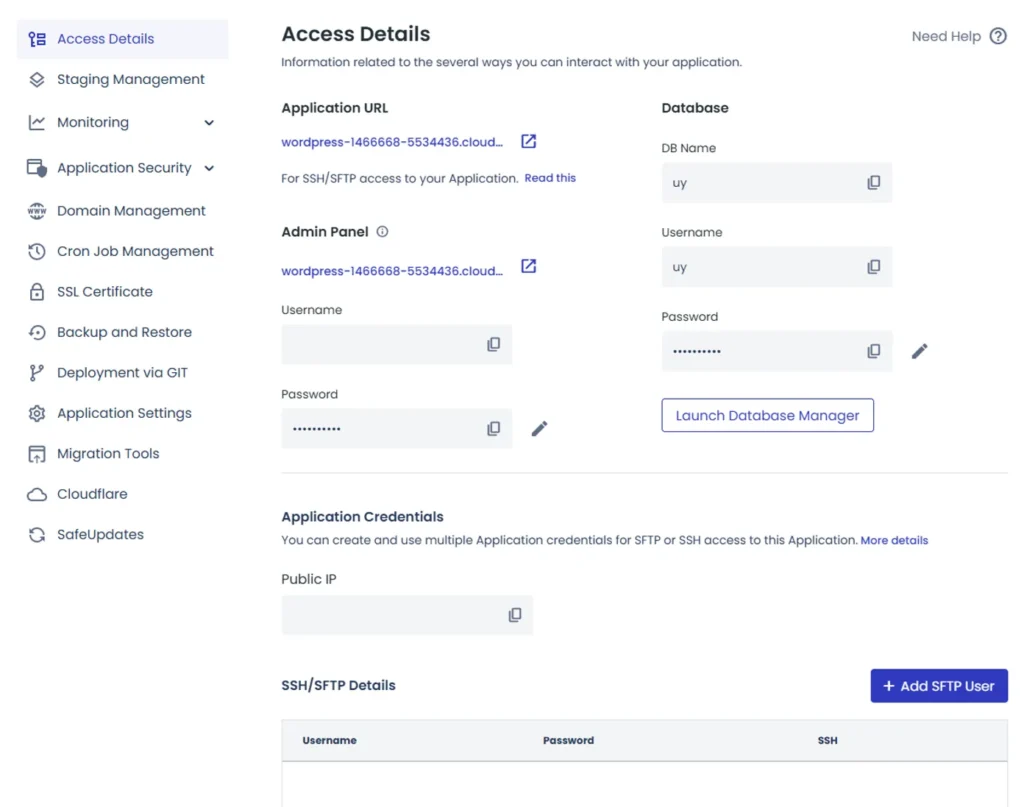
You can launch a WordPress website in a few clicks, manage your server, and make changes without knowing how to code.
Here are some features that make Cloudways easy to use:
- Custom Dashboard: Manage websites, applications, and cloud servers.
- One-Click WordPress Installation: Launch a WordPress website quickly.
- Staging Environment: Test website changes before making them live.
- Easy Server Scaling: Increase server resources directly from the dashboard.
- Team Management: Give team members access to specific servers and applications.
Cloudways is easy to use once you get familiar with its dashboard. However, beginners may need some time to understand its separate server and application settings.
Which Is Easier to Use?
ScalaHosting wins for ease of use. Its SPanel is more familiar and makes everyday website management simple, especially for beginners.
Cloudways is also user-friendly, but I’d recommend it more for developers and agencies who want greater control over their cloud servers.
Data Centers and CDN
Cloudways has a clear advantage in data center locations, but ScalaHosting also has a good selection of servers across the world.
ScalaHosting Data Centers and CDN

ScalaHosting offers 24 data center locations through its own infrastructure, integrated cloud providers, and AWS.
I like that ScalaHosting gives you locations in major regions, so you’re not limited to hosting your website in the US or Europe.
Some available locations include:
- North America: New York, Dallas, Seattle, and Montreal.
- Europe: London, Frankfurt, Amsterdam, Paris, and Sofia.
- Asia-Pacific: Mumbai, Singapore, Tokyo, Seoul, and Sydney.
For CDN, ScalaHosting supports Cloudflare, which you can connect to your website for free. Cloudflare also offers paid plans with additional speed and security features.
Cloudways Data Centers and CDN
Cloudways offers 150+ data center locations across 50+ countries, thanks to its partnerships with major cloud providers.
You can choose from providers such as DigitalOcean, AWS, Google Cloud, Vultr, and Linode, giving you far more server locations than ScalaHosting.
Some popular locations include:
- North America: New York, Dallas, San Francisco, and Toronto.
- Europe: London, Frankfurt, Amsterdam, and Paris.
- Asia-Pacific: Mumbai, Singapore, Tokyo, Sydney, and Melbourne.
Another thing I like about Cloudways is its Cloudflare Enterprise CDN, available as a paid add-on starting at $4.99/month.

It includes several useful features:
- Global CDN with 200+ locations.
- Image optimization.
- Advanced caching.
- Web Application Firewall (WAF).
- DDoS protection.
You can also connect Cloudflare’s free plan if you don’t need the Enterprise features.
Which One Is Better?
Cloudways wins this round. Its wider choice of data centers gives you more freedom to select a server close to your audience, and the Cloudflare Enterprise add-on is a nice option for websites that need extra performance and security.
ScalaHosting still covers the major regions well, and its free Cloudflare integration is perfectly suitable for most blogs and small business websites.
Security and Backups
ScalaHosting and Cloudways both have strong security features, but there are some important differences in what’s included for free and how their backup systems work.
ScalaHosting Security
ScalaHosting uses its own SShield security system, which monitors websites 24/7 and automatically blocks suspicious activity.
According to ScalaHosting, SShield blocks 99.998% of web attacks, making it one of the company’s standout security features.
Here’s what you get:
- SShield Protection: AI-powered security that detects and blocks malicious attacks in real time.
- 24/7 Security Monitoring: Keeps checking your websites for suspicious activity.
- Server Firewall: Blocks unwanted traffic and unauthorized access.
- Brute-Force Protection: Helps prevent repeated login attempts.
- Free SSL Certificates: Included with managed hosting plans.
The best part is that SShield comes included with ScalaHosting’s managed VPS plans, so you don’t need a separate paid security service for basic malware protection.
Cloudways Security
Cloudways also takes security seriously and includes several tools to protect your websites.
It uses server-level firewalls, bot protection, and WordPress vulnerability scanning. For more advanced protection, Cloudways offers paid security add-ons.
Its main security features include:
- Dedicated Firewall: Protects servers against malicious traffic.
- Imunify360 Protection: Malware detection and automatic cleanup through a paid add-on.
- WordPress Vulnerability Scanner: Finds security issues in WordPress plugins, themes, and core files.
- Bot and Brute-Force Protection: Helps block suspicious bots and login attacks.
- Free SSL Certificates: Let’s Encrypt SSL included.
- Cloudflare Enterprise: Additional WAF and DDoS protection starting at $4.99/month per domain.
Cloudways’ Malware Protection add-on starts at $4 per application per month. The price drops to $3 per application for 6–15 applications and $2 for larger quantities.
ScalaHosting Backups
ScalaHosting includes free automatic daily offsite backups with its managed cloud VPS plans.
Your backup files are stored separately from your main hosting server, and you can restore individual files, databases, or website accounts through SPanel.
Here’s how ScalaHosting handles backups:
- Backup Frequency: Every 24 hours.
- Backup Retention: 7 days, with 7 daily restore points under its documented standard backup policy.
- Backup Storage: Remote servers, separate from your hosting server.
- Backup Cost: Included with managed VPS hosting.
- Manual Backups: Available through SPanel.
- Restoration: Restore files and databases from available recovery points.
I like that ScalaHosting includes the backup service without charging separately for its standard offsite backups.
The 7-day retention is enough for recovering from recent mistakes, although it’s shorter than what Cloudways offers.
Cloudways Backups
Cloudways gives you much more control over your backup settings.
Instead of relying on daily backups, you can decide how often your website gets backed up and how long those copies are stored.
Here’s what Cloudways offers on its Flexible platform:
- Backup Frequency: Every 1 hour to 7 days.
- Backup Retention: Choose between 1 and 4 weeks (7–28 days).
- Offsite Backups: Stored separately from your hosting server.
- On-Demand Backups: Create additional backups before important changes.
- Backup Restoration: Restore your application using available recovery points.
- Backup Storage Cost: $0.033 per GB, billed separately.
For example, if you have 50 GB of billable backup storage, the storage charge works out to approximately $1.65 per month.
I particularly like the hourly backup option. If you run a WooCommerce store that receives orders throughout the day, having recent restore points is much more useful than depending on yesterday’s backup.
Backup Comparison
| Backup Feature | ScalaHosting | Cloudways |
|---|---|---|
| Automatic backups | Yes | Yes |
| Backup frequency | Daily | Every 1 hour to 7 days |
| Backup retention | 7 days (standard policy) | 7–28 days |
| Offsite storage | Yes | Yes |
| Manual backups | Yes | Yes |
| Backup restoration | Yes | Yes |
| Backup cost | Included | $0.033/GB |
Which Is Better for Security and Backups?
ScalaHosting wins for security value. Its SShield protection, 24/7 monitoring, and included security tools make it a good choice without additional monthly charges.
Cloudways wins for backups. You can schedule hourly backups and keep them for up to 28 days, compared with ScalaHosting’s standard 7-day backup history.
My preference would be ScalaHosting for regular WordPress websites and Cloudways for busy WooCommerce stores where frequent backups are particularly important.
Developer Tools
Both ScalaHosting and Cloudways offer useful tools for developers, including SSH access, Git, WP-CLI, staging environments, and cron jobs.
However, Cloudways has a more developer-focused dashboard, while ScalaHosting gives you more control over server configurations through SPanel.
ScalaHosting Developer Tools
ScalaHosting offers a good selection of developer tools with its managed VPS hosting plans.
You can manage PHP settings, access your server through SSH, work with Git repositories, and create staging websites directly from SPanel.
Here are its main developer features:
- SSH Access: Securely access your hosting account and run commands.
- Git Integration: Deploy code from GitHub, GitLab, and Bitbucket.
- WP-CLI: Manage WordPress through command-line tools.
- PHP Version Management: Choose different PHP versions for individual websites.
- Staging Environments: Test WordPress changes before publishing them.
- Cron Jobs: Schedule automated tasks through SPanel.
- Database Management: Manage MySQL databases and users.
- Server Configuration: Choose compatible web servers and adjust supported server settings.
One thing I like about ScalaHosting is that SPanel lets you handle many technical tasks without using command-line tools.
Cloudways Developer Tools
Cloudways is particularly good for developers who regularly work with Git, staging websites, and multiple applications.
Its dashboard includes built-in development tools, so you don’t need to configure everything manually.
Here’s what Cloudways offers:
- SSH and SFTP Access: Connect to your applications and securely transfer files.
- Git Deployment: Deploy code directly from GitHub, GitLab, or Bitbucket repositories.
- WP-CLI: Manage WordPress plugins, themes, and databases through SSH.
- Composer: Install and manage PHP dependencies.
- One-Click Staging: Create staging copies and push tested changes to your live website.
- Cron Jobs: Schedule tasks through the dashboard.
- Team Collaboration: Assign different permissions to developers and team members.
- Cloudways API: Automate supported server and application management tasks.
What I particularly like is Cloudways’ staging system. You can create a staging copy on the same server or another server and push files, databases, or both to your live website.
Cloudways also supports Git deployment through SSH keys, which is useful when you’re regularly updating custom WordPress themes or applications.
Developer Tools Comparison
| Feature | ScalaHosting | Cloudways |
|---|---|---|
| SSH access | Yes | Yes |
| SFTP access | Yes | Yes |
| Git deployment | Yes | Yes |
| WP-CLI | Yes | Yes |
| Composer | Supported via SSH | Supported via SSH |
| WordPress staging | Yes | Yes |
| Cron jobs | Yes | Yes |
| PHP version selection | Yes | Yes |
| Database management | Yes | Yes |
| Team access controls | Yes | Yes |
| API for platform automation | Not a comparable core feature | Yes |
| Full root access | Self-managed VPS | Not on standard managed servers |
Which Is Better for Developers?
Cloudways wins for developer tools. Its Git deployment, staging controls, built-in SSH terminal, team permissions, and API make it especially useful for developers and agencies managing multiple websites.
ScalaHosting is still a good choice, particularly if you prefer SPanel and want more freedom to configure your VPS environment.
I’d choose Cloudways for everyday development workflows and ScalaHosting for VPS customization.
Customer Support
ScalaHosting and Cloudways both offer 24/7 support, but there’s a noticeable difference in their response times and the level of help included with their hosting plans.
Here’s how their customer support compares:
| Support Feature | ScalaHosting | Cloudways |
|---|---|---|
| Support availability | 24/7 | 24/7 |
| Live chat | Yes | Yes |
| Support tickets | Yes | Yes |
| Average live chat response | 15 seconds | Not publicly specified |
| Ticket response time | Around 15 minutes | Within 12 hours (Standard Support) |
| Customer satisfaction | 98.9% | Not directly comparable |
| Server management support | Included with managed VPS | Included |
| WordPress troubleshooting | Available within support scope | Advanced/Premium for deeper troubleshooting |
| Free website migration | Yes | Yes, first website |
| Phone support | Not a standard channel | Premium Support |
| Priority support | Managed hosting assistance included | Paid Advanced/Premium plans |
| Knowledge base | Yes | Yes |
| Standard support cost | Included | Included |
ScalaHosting Customer Support
What I like about ScalaHosting is how quickly its team responds. The company reports an average live chat response time of 15 seconds and ticket replies in around 15 minutes.
Its managed VPS support also covers server configuration, SSL installation, email issues, and other technical problems. You don’t need to purchase a separate premium support plan for routine managed-server assistance.
Cloudways Customer Support
Cloudways provides free Standard Support with all hosting plans, but faster ticket responses and more advanced troubleshooting are available through paid plans.

Its Advanced Support starts at $25/month under the promotional offer, while Premium Support starts at $500/month. The actual charge depends on your monthly hosting invoice.
Premium Support also includes phone support and private Slack access, which can be useful for larger businesses.
Which Has Better Customer Support?
ScalaHosting wins for customer support. Its fast response times and included technical assistance make it more convenient for most website owners.
Cloudways offers more support tiers, but you’ll need a paid plan for priority responses and advanced troubleshooting.
Pricing
Cloudways is cheaper to get started with, but ScalaHosting includes several features that you’d otherwise need to pay extra for.
The biggest difference is how they charge. ScalaHosting offers discounted prices for longer hosting terms, while Cloudways uses pay-as-you-go billing with no long-term commitment.
ScalaHosting Pricing
ScalaHosting’s managed cloud VPS plans currently start at $29.95/month, with four standard plans and the option to customize your server.
Here’s the pricing breakdown:
| Plan | Starting Price | Renewal Price |
|---|---|---|
| Build #1 | $29.95/mo | $54.95/mo |
| Build #2 | $44.95/mo | $96.95/mo |
| Build #3 | $69.95/mo | $170.95/mo |
| Build #4 | $94.95/mo | $244.95/mo |
The Build #1 plan comes with 2 CPU cores, 4 GB RAM, and 50 GB NVMe SSD storage, which is a good starting point for WordPress websites.
What I like about ScalaHosting is how much it includes in the price:
- Free SPanel control panel
- Unlimited email accounts
- Daily offsite backups
- SShield malware protection
- Free website and email migration
- Dedicated IP address
- Unmetered bandwidth
You also get an anytime money-back guarantee.
The main downside is the renewal price. For example, Build #1 increases from $29.95 to $54.95/month, an increase of about 83%.
Cloudways Pricing
Cloudways Flexible starts at just $11/month with DigitalOcean infrastructure.
You can choose from several cloud providers, although DigitalOcean offers some of the most affordable plans.
Here’s what popular DigitalOcean plans cost on Cloudways:
| Plan | RAM | CPU | Storage | Monthly Price |
|---|---|---|---|---|
| DO1GB | 1 GB | 1 Core | 25 GB | $11 |
| DO2GB | 2 GB | 1 Core | 50 GB | $24 |
| DO4GB | 4 GB | 2 Cores | 80 GB | $46 |
| DO8GB | 8 GB | 4 Cores | 160 GB | $88 |
I like Cloudways’ flexible billing system. You can launch a server, use it for as long as you need, and pay based on your usage.
There are also no standard introductory renewal price increases.
However, some services cost extra:
- Offsite Backups: $0.033 per GB of backup storage.
- Cloudflare Enterprise CDN: Starts at $4.99/month per domain.
- Malware Protection: Starts at $4/month per application.
- Email Hosting: Requires a paid add-on or external email provider.
Cloudways also offers a 3-day free trial without a credit card, so you can explore the platform before paying.
Pricing Comparison
| Pricing Feature | ScalaHosting | Cloudways |
|---|---|---|
| Starting price | $29.95/mo | $11/mo |
| Billing | Monthly or longer-term | Pay-as-you-go |
| Renewal increase | Yes | No standard increase |
| Free backups | Included | Storage billed separately |
| Email hosting | Included | Extra cost |
| Free trial | No | 3 days |
| Money-back guarantee | Anytime | No standard guarantee |
| Long-term contract required | No, but longer terms offer discounts | No |
Which Offers Better Value for Money?
Cloudways wins on starting price and billing flexibility. At $11/month, it’s an affordable way to get started with managed cloud hosting.
However, if you compare servers with similar resources, the difference becomes more interesting.
ScalaHosting’s Build #1 offers 2 CPU cores and 4 GB RAM for $29.95/month initially, while a Cloudways DigitalOcean server with the same CPU and RAM costs $46/month.
That’s a $16.05 monthly difference during ScalaHosting’s introductory term, and ScalaHosting also includes email hosting and offsite backups.
My pick is ScalaHosting for overall value, especially if you plan to host multiple websites and use the included features.
Cloudways makes more sense if you want a smaller server, flexible monthly expenses, or the freedom to change cloud providers.
Pros and Cons
ScalaHosting Pros
- Free SPanel control panel without cPanel licensing fees.
- Free daily offsite backups with 7-day retention.
- SShield security with a claimed 99.998% attack-blocking rate.
- Unlimited email accounts included with managed VPS plans.
- 99.99% uptime guarantee.
- Free website and email migrations.
- 24/7 support with a reported 15-second average live chat response.
- LiteSpeed/OpenLiteSpeed support and Redis caching.
- Dedicated CPU and RAM resources on managed VPS plans.
ScalaHosting Cons
- Higher renewal prices after the introductory term.
- Fewer data center locations than Cloudways.
- No hourly automatic backups in the standard setup.
- Higher starting price than Cloudways.
- No standard free trial.
Cloudways Pros
- Affordable starting price of $11/month.
- 150+ data center locations through cloud providers.
- Choice of DigitalOcean, AWS, Google Cloud, and other infrastructure providers.
- Flexible pay-as-you-go billing without standard renewal increases.
- Automatic backups as frequently as every hour.
- Backup retention of up to 28 days.
- Lightning server technology for dynamic websites.
- Built-in staging, Git deployment, SSH, and WP-CLI.
- Easy server scaling through the dashboard.
- 3-day free trial without a credit card.
Cloudways Cons
- Email hosting is not included.
- Offsite backup storage costs $0.033/GB.
- Cloudflare Enterprise CDN starts at $4.99/month per domain.
- Malware Protection starts at $4/application/month.
- Advanced and Premium support plans cost extra.
- No full root access on standard managed servers.
- No standard money-back guarantee.
Which One Should You Choose?
I’d recommend ScalaHosting for most WordPress users, mainly because it includes more useful features without charging separately for each one.
However, Cloudways is worth considering if you want more flexibility with cloud servers and monthly billing.
Choose ScalaHosting If:
- You want managed VPS hosting with dedicated CPU and RAM resources.
- You prefer a simple control panel like SPanel instead of learning a new dashboard.
- You want free email hosting, daily offsite backups, and SShield security included.
- You manage multiple WordPress websites and want to avoid paying for separate hosting add-ons.
- You want LiteSpeed caching and a 99.99% uptime guarantee.
Choose Cloudways If:
- You want to start with a smaller server at $11/month.
- You prefer pay-as-you-go billing without long-term commitments.
- You want to choose between DigitalOcean, AWS, Google Cloud, and other cloud providers.
- You need hourly backups with up to 28 days of retention.
- You manage WooCommerce stores or websites that need flexible server scaling.
- You want access to a wider selection of data center locations.
Best Alternatives to ScalaHosting and Cloudways
ScalaHosting and Cloudways are not the only managed options. If you want WordPress-only hosting, a bigger CDN, or a host that will clean malware, these four come up a lot.
| Host | Starting price (Annual) | Sites | Storage |
|---|---|---|---|
| Kinsta | $30/mo | 1 | 15 GB |
| Pressable | $20.83/mo | 1 | 20 GB |
| WP Engine | $26.25/mo | 1 | 10 GB |
| WPX | $14.99/mo | 1 | 10 GB |
Kinsta
Kinsta is worth considering if you want premium managed WordPress hosting without worrying about server management.
Its entry plan includes 10 GB storage, 125 GB CDN bandwidth, 14-day backup retention, and Cloudflare-powered performance and security features.
I particularly like its MyKinsta dashboard, which makes staging, backups, and WordPress management simple.
Check this too: Kinsta vs Cloudways
Pressable
Pressable is owned by Automattic, the company behind WordPress.com, and is an interesting option for WordPress and WooCommerce websites.
Its Signature 1 plan costs $25/month or $20.83/month with annual billing.
You get:
- 1 WordPress website
- 30,000 monthly visits
- 20 GB storage
- Hourly and daily backups
- Jetpack Security
- 24/7 WordPress support
I like that Pressable includes 20 GB storage on its entry plan, along with a staging environment and WordPress-focused support.
WP Engine
WP Engine is another well-known managed WordPress hosting provider, particularly among businesses and agencies.
Its Startup plan includes 1 website, 25,000 monthly visits, 10 GB storage, and 75 GB bandwidth.
You also get EverCache technology, daily backups, staging environments, and WordPress-specific technical support.
One thing I like about WP Engine is its development tools, especially its staging environments and local development workflow.
Check this too: WP Engine vs Cloudways
WPX
WPX is a good option if you want fast WordPress hosting with useful extras already included.
Its Starter plan begins at $17.99/month and supports 1 website with 10 GB storage and 100 GB bandwidth.
It also includes:
- Free global CDN
- Daily automatic backups
- Free malware scanning and removal
- Free website migration
- 24/7 technical support
What I particularly like about WPX is its free malware removal service. That’s a useful advantage if you don’t want to pay separately for website cleanup.
Check these too: WPX vs Cloudways and WPX vs ScalaHosting
FAQs
Is ScalaHosting better than Cloudways?
It depends on what you care about. ScalaHosting is better if you want SPanel, included email, team migration, and faster raw server speed. Cloudways is better if you want DigitalOcean, Vultr, AWS, or Google Cloud, and a price that does not jump at renewal.
Which is cheaper, ScalaHosting or Cloudways?
ScalaHosting can be cheaper in year one because of intro deals. Cloudways is often cheaper from year two, because $11/month stays $11/month unless you resize the server or add extras. Always compare ScalaHosting’s renewal rate, not only the sale price.
Which is faster, ScalaHosting or Cloudways?
ScalaHosting is usually faster at the origin, especially on newer VPS plans with LiteSpeed. Cloudways gets close on Vultr High Frequency with Varnish, Redis, and Object Cache Pro turned on. A small DigitalOcean plan will not match that.
Does ScalaHosting include email?
Yes. VPS and most shared plans include mailboxes. They use the plan’s disk space. Cloudways does not include email. You add Rackspace or Titan, or use Gmail.
Does Cloudways include a free domain?
No. ScalaHosting includes a free domain for the first year on Start, Entry Cloud, and managed VPS (not Mini), if you take a 1-year term.
Can I host WooCommerce on both?
Yes. ScalaHosting needs enough CPU and RAM, plus LiteSpeed and object cache if you can use them. Cloudways is built for WooCommerce and can keep products and orders in a move. Do not run a busy shop on a 1GB Cloudways server.
Does ScalaHosting or Cloudways offer free migration?
Both do. ScalaHosting’s team moves files, databases, and email on every plan. Cloudways gives you an unlimited DIY plugin and one free expert move.
Does Cloudways have a money-back guarantee?
No 30-day refund. You get a 3-day free trial. ScalaHosting gives new clients a 30-day full refund, then a prorated refund on hosting if you cancel later.
Is Cloudways good for beginners?
You can launch a site without knowing Linux, but the dashboard is more “server then app” than a simple WordPress panel. ScalaHosting is easier if you want email and WordPress tools in one place.
Can I switch cloud providers on Cloudways?
You choose the cloud when you create the server. You can’t change DigitalOcean to AWS on that same server. Launch a new server on the other cloud and move the site over.
Conclusion
After comparing ScalaHosting and Cloudways, ScalaHosting would be my first choice for most WordPress websites.
I like that ScalaHosting includes SPanel, SShield security, email hosting, and daily offsite backups without charging separately for these features. Its managed VPS plans also offer dedicated resources, making it a good option for businesses and growing websites.
Cloudways has its own advantages, though. With plans starting at $11/month, flexible billing, multiple cloud providers, and hourly backup options, it’s a better fit if you want more control over your hosting.
The one thing I’d pay attention to is the long-term cost. ScalaHosting has higher renewal rates, while Cloudways charges separately for certain services.